
How to Prioritize Your IT Budget When Everything Feels Important
When your roof is leaking and your kitchen needs an update, both projects matter. But only one is likely to cause immediate damage.
IT budgeting works the same way.
You may have aging laptops, software renewals, security upgrades, and frustrated employees asking for a better system. Each request may be valid. That does not mean each one needs to be funded right now.
The real goal of IT budgeting is to separate urgent needs from important-but-waiting items. You need to know what deserves attention now, what should be planned for soon, and what can reasonably wait.
Here are three questions that can help you sort the list.
1. What happens if we wait?
Start by looking at the cost of doing nothing.
An older laptop may be slower than it used to be, but if it is still reliable, secure, and supported, replacing it may not be your top priority. A security gap that exposes sensitive data is different. So is a system that regularly fails and keeps employees from doing their jobs.
The key question is business impact.
If you wait three or six months, what happens? Do employees lose time? Does the risk of downtime increase? Could a small issue become more expensive later?
Priorities should be based on what waiting could cost the business, not just how long something has been sitting on the wish list.
2. What do we already know is coming?
Many IT costs are predictable before the invoice arrives.
For example, if your company uses Microsoft 365 and plans to hire several people later this year, those employees will need accounts and licenses. You may not be paying for them today, but the cost is already on the way.
The same is true for software renewals, hardware warranties, support contracts, and planned equipment replacements.
Once you know what is coming, you can plan around it. That may mean setting aside money for renewals, spreading purchases across multiple quarters, or delaying a lower-priority project.
A good IT budget should reduce surprises, not create them.
3. What is changing in the business?
Your IT budget should match where the business is headed.
If you are opening a second location, technology planning needs to start early. You will need to think about internet service, Wi-Fi, phones, computers, access to company systems, cybersecurity, and day-to-day support for the new site.
If those decisions wait until opening week, your options shrink. Costs may rise. Problems become harder to solve.
The same applies to remote work, hybrid teams, new service lines, new compliance requirements, or changes in how employees serve customers.
Business changes usually create technology needs. The earlier you connect those plans to the IT budget, the easier it is to spend wisely.
Know what needs to come first
The roof and the kitchen may both need work. The difference is knowing which one can wait.
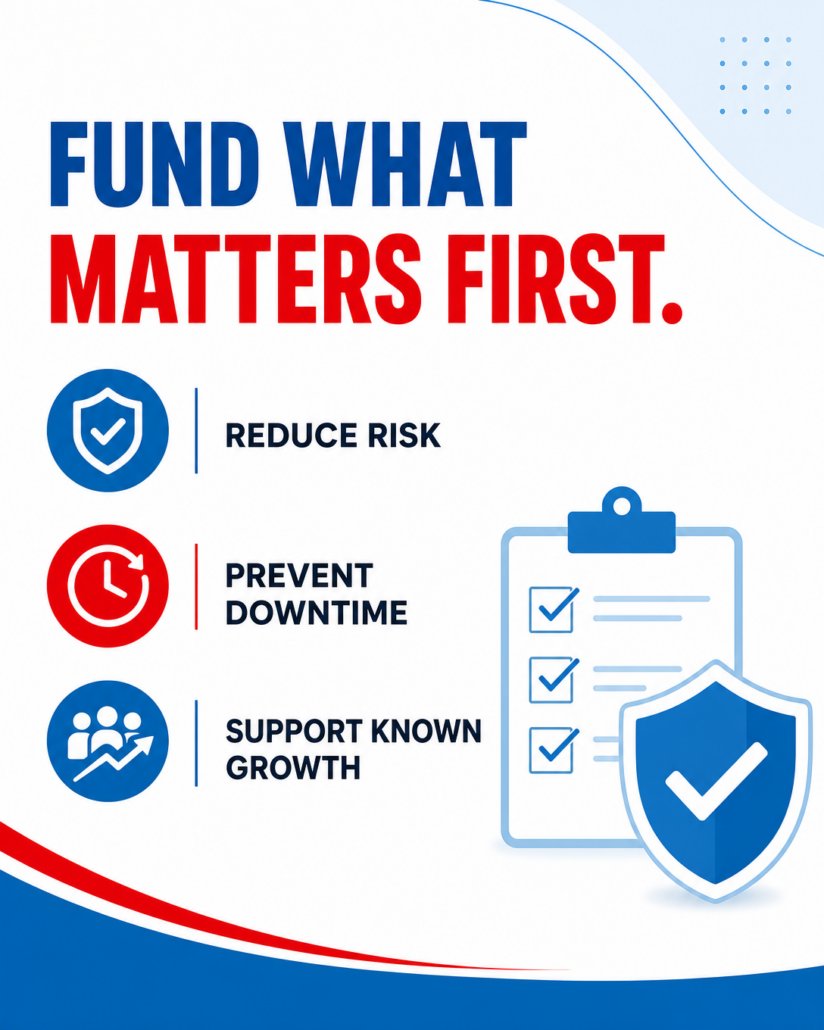
Your IT budget should work the same way. Some expenses reduce risk or prevent disruption. Some prepare the business for changes you already know are coming. Others can stay on the list for another quarter without creating a bigger problem.
You should not have to treat every IT expense like an emergency.
We can help you review your IT priorities, understand the business impact, and decide what should be funded now, what should be planned for next, and what can wait.
Schedule a 10-minute discovery call to get a clearer view of your IT budget priorities.
Call 877-807-1332 or visit xsolutions.com/discovery